Problem it solves
Biller and top-up providers rarely behave the same way. Each provider can have its own credentials, request format, service codes, downtime, retries, webhooks, and reconciliation rules.
Integrated Billers connects providers, client applications, and kiosks so users can access bill payments, top-ups, and service transactions through one controlled API layer.
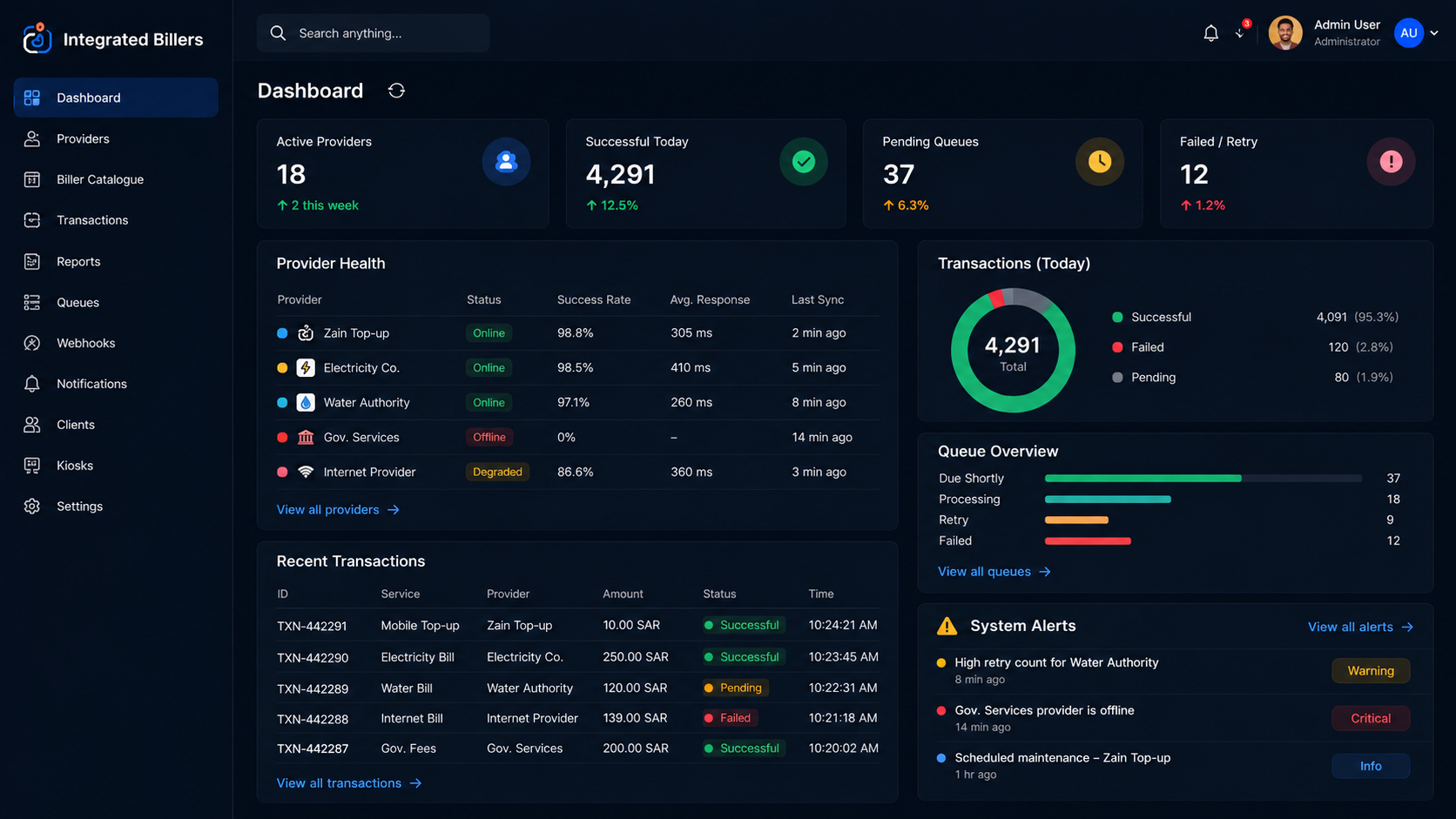
Biller and top-up providers rarely behave the same way. Each provider can have its own credentials, request format, service codes, downtime, retries, webhooks, and reconciliation rules.
Integrated Billers sits between providers and channels. It manages provider connections, client API access, request transformation, service routing, monitoring, webhooks, caching, notifications, billing, support, queues, and kiosk consumption.
Integrated Billers is a provider orchestration platform for bill payments, top-ups, and service transactions. It gives client applications and kiosks a single access point instead of separate integrations for every biller.
The backend handles provider reliability, security, routing, data transformation, logs, alerts, webhooks, subscriptions, and support. The kiosk application uses that backend to present services to end users at the terminal.
Each area maps to a real workflow a buyer, operator, or administrator would recognize.
Credentials, provider health, retries, failover, endpoint availability, and provider-specific connection rules are managed in one layer.
Client applications receive secure API keys, permissions, traffic limits, request logs, usage reports, rotation, and revocation controls.
Phone numbers, account references, service codes, and provider-specific payloads are validated, transformed, and routed to the right provider.
Logs, alerts, webhooks, cache rules, asynchronous queues, backlog monitoring, and delivery tracking keep operations observable.
Admins manage users, subscriptions, support tickets, billing reports, notification settings, system configuration, backups, and maintenance.
The kiosk application consumes the same backend API to offer biller and top-up services through a self-service terminal experience.
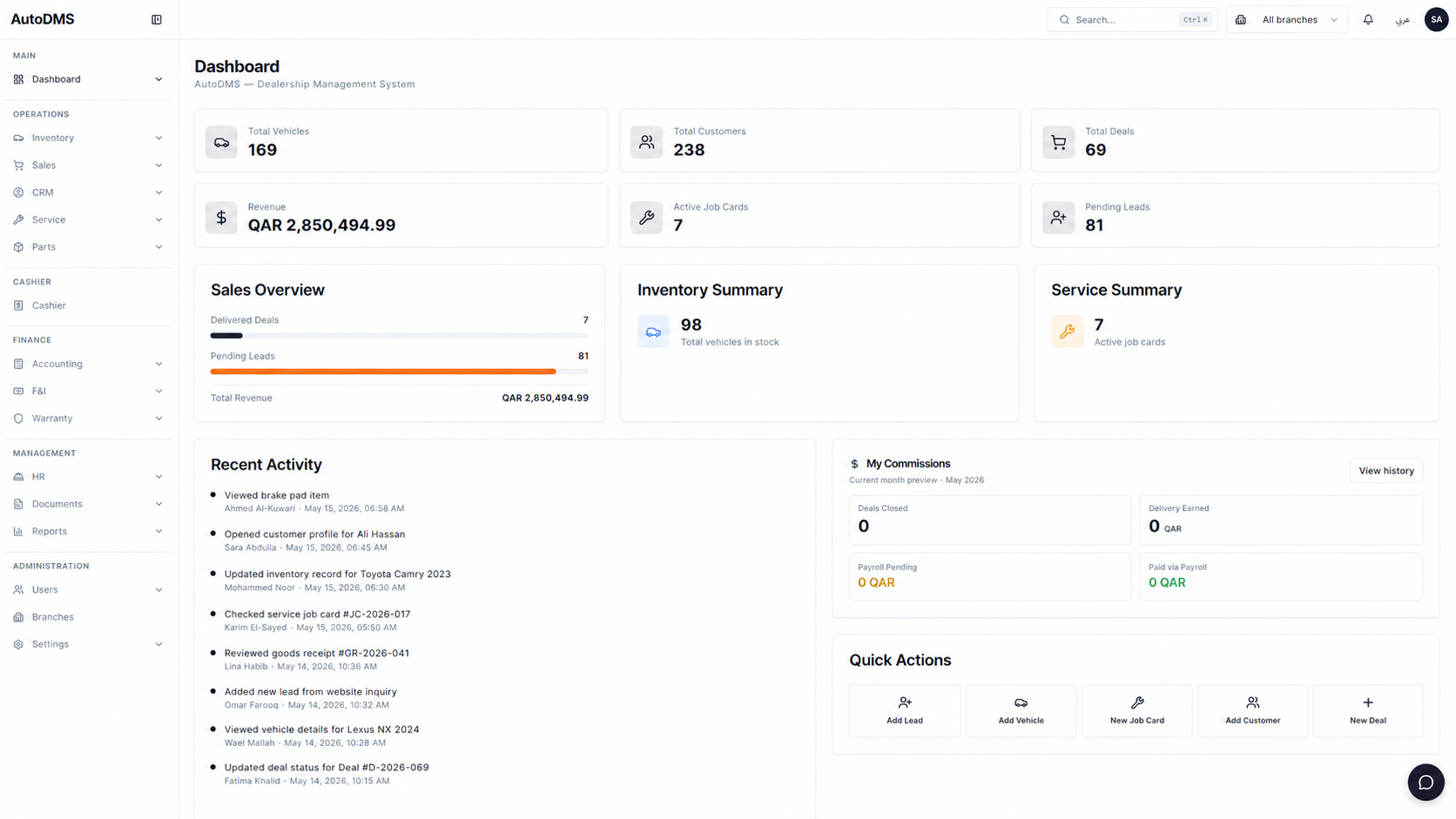
AutoDMS centralizes dealership sales, service, parts, inventory, customers, finance records, and branch reporting so every department works from the same operating system.
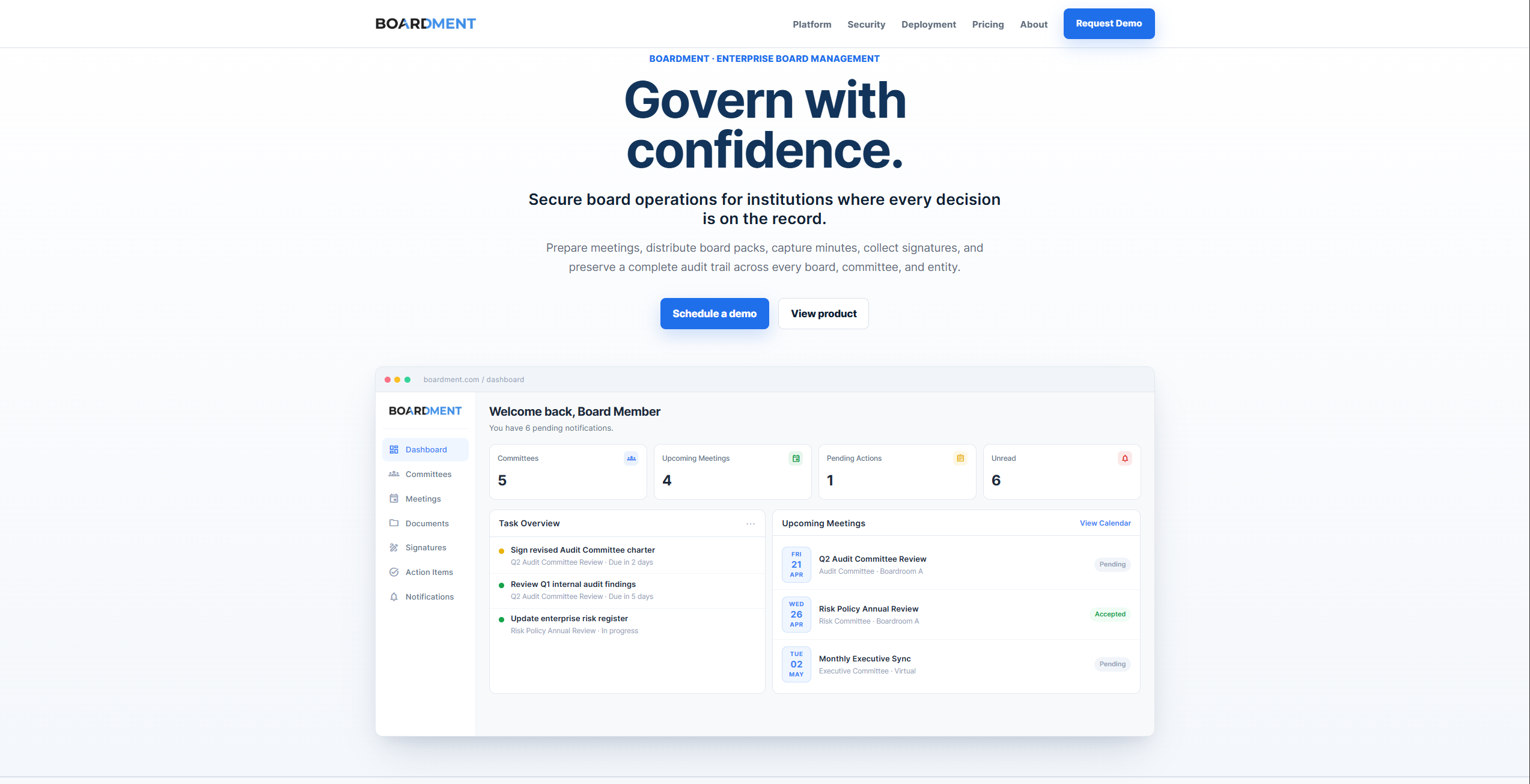
Boardment is board management software for institutions that need meeting packs, committees, minutes, signatures, decisions, action items, and audit trails under controlled access.

iCAUR Qatar is a dealership CMS for Powerline Motors, combining a premium automotive website, flexible brand and model catalog, lead capture, admin dashboard, and embedded assistant.